
Frozen Food vs Fresh: Why the Freezer Aisle Wins
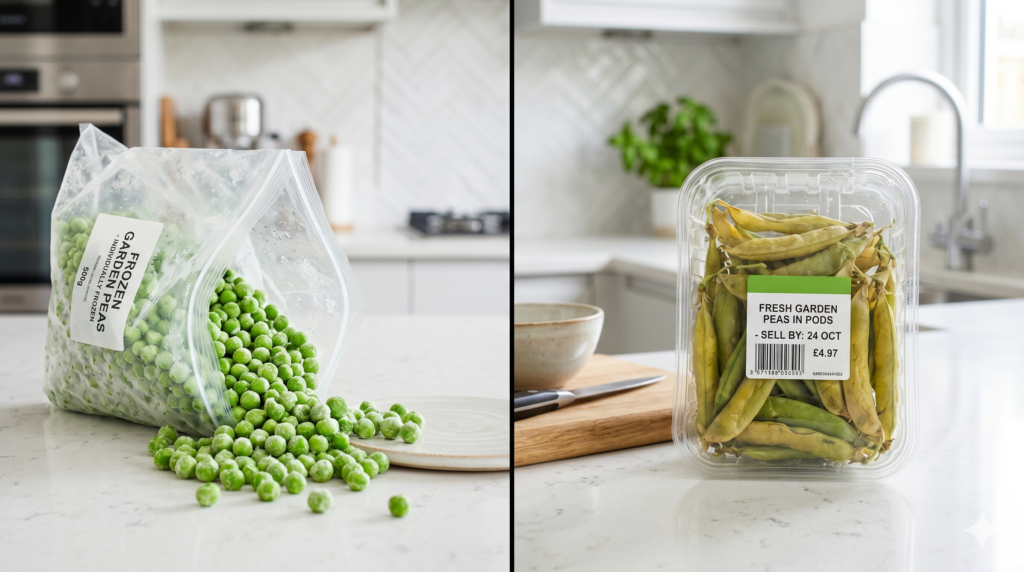
Comparison of frozen food vs fresh produce showing vibrant frozen peas next to wilting fresh peas.
A bag of frozen peas costs $1.69. The fresh ones next to them cost three times more. You reach for the fresh because you think frozen food vs. fresh means lower quality. But those fresh peas were picked 7 to 14 days ago, losing vitamin C every hour in transit.
The frozen peas were picked at peak ripeness, blanched, and flash frozen within hours of leaving the soil. After 5 days in your refrigerator, a University of Georgia study found the frozen peas had more vitamins than the fresh ones.
How Freezing Actually Preserves Food
So, how does freezing actually preserve food? What happens inside the cell when ice forms? And how do you tell which frozen products are worth buying?
Humans have frozen food for as long as there has been winter. But modern frozen food begins with one man watching the Inuit fish. In 1912, Clarence Birdseye, a naturalist from Brooklyn, moved to Labrador in northern Canada. The Inuit taught him to ice fish through thick frozen lakes. When they pulled fish from the water, the catch froze almost instantly in -40° air.
Months later, thawed and cooked, it tasted fresh. Birdseye understood why. Extreme cold froze the fish so fast that ice crystals had no time to grow large enough to damage cells. Back in New York, commercially frozen fish sold poorly: mushy, watery, and tasteless. That fish had been frozen slowly, giving ice crystals time to expand and puncture cell walls. When thawed, ruptured cells leaked fluid, and the food fell apart.
Birdseye spent a decade building machines that replicated what Labrador air did naturally. In 1924, he patented a process that packed food into waxed cartons and froze them between refrigerated metal plates under pressure. In 1929, he sold the company for $22. The first retail frozen products hit shelves in 1930. The frozen aisle was born.
The Science of Ice Crystals in Frozen Food vs Fresh
Everything in frozen food vs. fresh comes down to one question: How big are the ice crystals?
Water makes up 60 to 90% of most fresh produce by weight. When the temperature drops below 0°C, that water begins to crystallize. If the cooling is slow, a few ice crystals form first and then grow outward, absorbing surrounding water molecules into larger and larger structures. These crystals are big enough to pierce cell walls. When the food thaws, the damaged cells release their liquid.
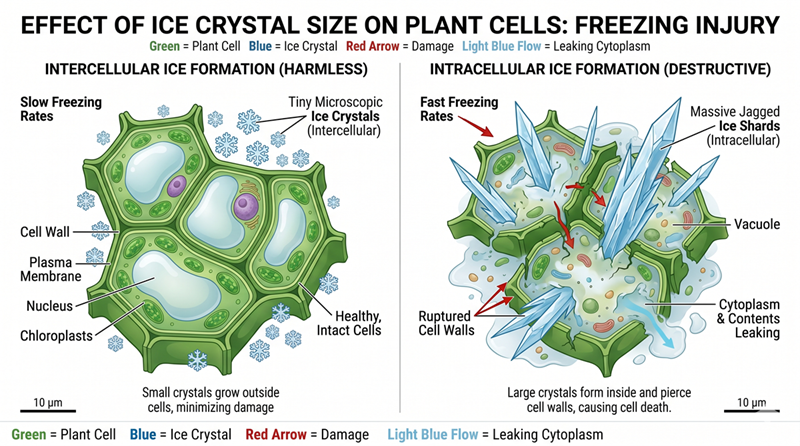
That is why a slowly frozen strawberry turns to mush. The structure is gone. Flash freezing changes the physics. When temperature drops rapidly to -30 or -40°C, water molecules crystallize simultaneously across the entire piece of food. Millions of tiny crystals form at once instead of a few large ones. These microcrystals are too small to puncture cell walls. The cellular structure stays intact. When the food thaws, the cells hold their shape, their liquid, and their nutrients.
Modern IQF Technology and Flash Frozen Vegetables
In a modern frozen vegetable plant, the process starts within hours of harvest. Peas are picked by machine in the morning, trucked to the factory, washed, and blanched in steam or hot water at 80 to 95°C for 60 to 90 seconds. Blanching deactivates enzymes that would otherwise cause the peas to lose color, flavor, and vitamins even while frozen. It is a controlled burst of heat that stops the biological clock. Then the peas are cooled immediately in ice water to prevent cooking. Next comes the freezer.
Most modern plants use individually quick-frozen technology, known as IQF technology. The peas travel on a mesh conveyor belt through a tunnel, blasting air at -35 to -40° C. Each pea freezes individually in minutes rather than clumping into a solid block. This is why frozen peas pour freely from the bag instead of coming out as a brick. IQF technology changed the industry because it meant consumers could use exactly as much as they needed and return the rest to the freezer.
The frozen peas are then weighed, packed, sealed, and moved into cold storage at -18°C or below. At that temperature, microbial growth effectively stops. Enzymes are dormant. Chemical reactions slow to near zero. The food is not dead. It is suspended. A bag of properly stored flash frozen vegetables will maintain its nutritional value for 8 to 12 months.
Food Waste Reduction: Another Win for Frozen
Compare that timeline to fresh ones. Those peas at the supermarket were picked before peak ripeness to survive transport. They spent 3 to 14 days in trucks and warehouses at refrigerated but above-freezing temperatures. Every day vitamin C degraded. Enzymes continued breaking down sugars and starches. By the time you cook them 5 days after buying, they may have lost 40 to 50% of their original vitamin C. The frozen peas, blanched and locked in at peak ripeness hours after harvest, still have theirs.
And this is where the money comes in. Americans throw away roughly 30 to 40% of all food purchased. Fresh produce is the single largest category of food waste. It goes bad before people eat it. Frozen food barely contributes because it does not spoil on a weekly schedule. The average household wastes over $2,000 in food per year. A family that shifted a third of their fresh produce to frozen equivalents would save hundreds annually in food waste reduction alone before counting the lower shelf price.
Navigating the Freezer Aisle for Frozen Food vs Fresh
The frozen pea at $1.69 is not cheaper because it is worse. It is cheaper because it does not rot on the way to your house. But here is the part the frozen food industry does not advertise.
Not everything in the frozen aisle is flash-frozen. Frozen meals, pizzas, and dinners are manufactured products that happen to be stored frozen. Many contain 700 to 1,500 mg of sodium per serving, sometimes over 60% of the daily limit in a single box. Some contain preservatives, stabilizers, and thickeners that have nothing to do with freezing. The misconception works in both directions.
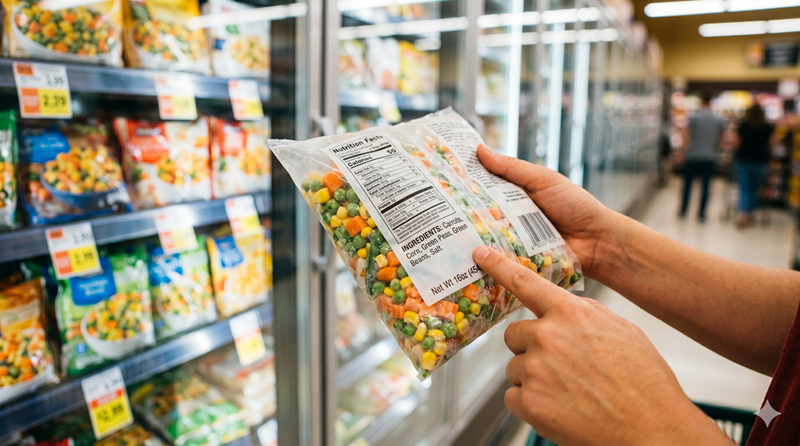
People avoid frozen vegetables thinking they are processed. They buy frozen meals thinking they are healthy. The vegetables are often less processed than the fresh ones next to them. The meals are often more processed than anything else in the store. The freezer aisle is not one category. It is two completely different products sharing the same temperature.
Final Verdict: Making the Smart Choice in Frozen Food vs Fresh
Next time you stand in front of the freezer case, flip the bag. For frozen fruits and vegetables, the ingredient list should have one item. Peas or broccoli or strawberries. If you see sugar, salt, sauce, or anything you cannot pronounce, put it back. A plain frozen vegetable with one ingredient was flash-frozen at peak ripeness and is nutritionally equal to or better than the fresh version sitting in your drawer for 5 days.
For frozen meals, check sodium first. Above 600 mg per serving is high. Check the ingredient list length. 30 ingredients mean manufactured. A bag of frozen shrimp with one ingredient is just shrimp. Price anchor.
Plain frozen vegetables run $1 to $3 per pound. Fresh equivalents run $2 to $5. Frozen waste less, lasts months, and delivers equal or higher vitamin content. One rule. If it has one ingredient, it is better than you think. If it has 30, read the label before you trust the box. A $1.69 bag of peas. Picked at dawn, frozen by noon, locked in at peak nutrition for a year. The fresh ones traveled 2 weeks to reach you.
So, the next time you are debating frozen food vs. fresh, remember that the freezer aisle holds some of the most nutritious, budget-friendly secrets in the entire supermarket. Swap out your rapidly decaying fresh produce for a one-ingredient, flash-frozen alternative to start enjoying peak freshness and better vitamins year-round. Don’t forget to check out our other guides on smart grocery shopping to keep your kitchen running efficiently, and drop a comment below letting us know your absolute favorite frozen staple!
Share this content: